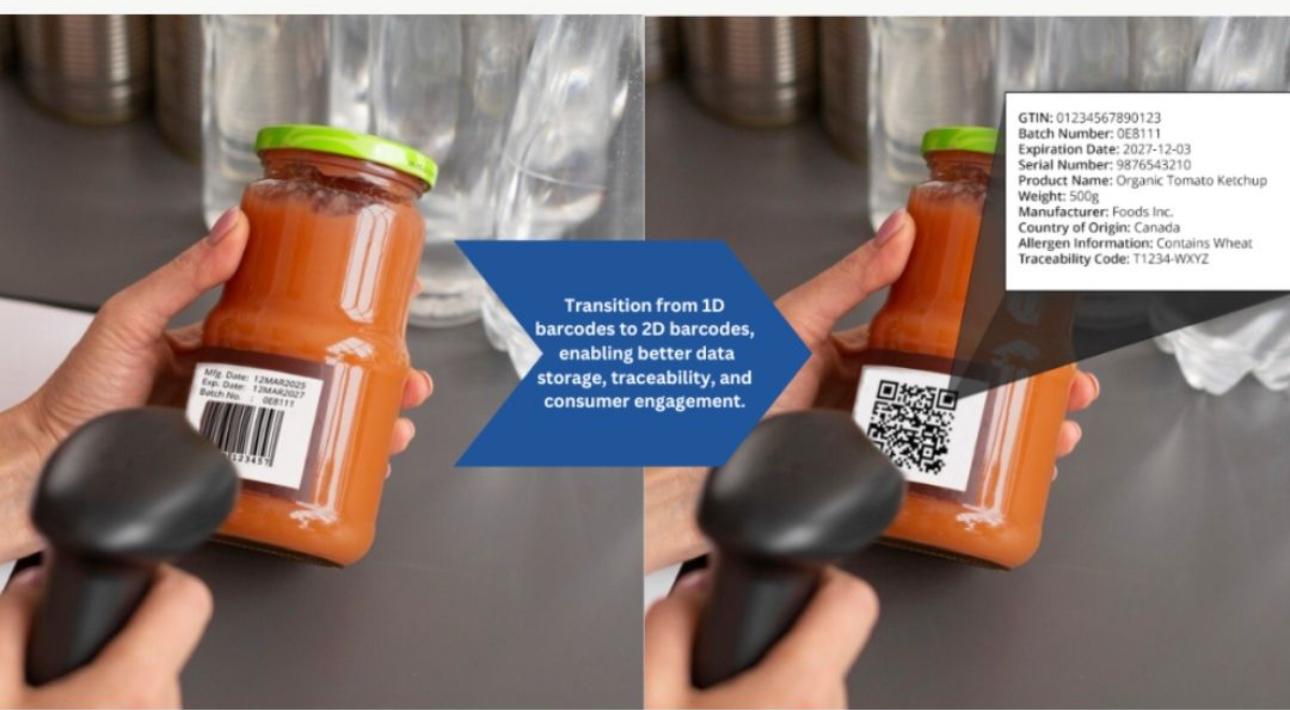
GS1 Sunrise 2027 is a global initiative led by GS1 (the organization that sets global barcode standards) aimed at enhancing
product traceability, data integrity, and consumer safety. This initiative is particularly important for manufacturers operating in highly regulated sectors such as pharmaceuticals, food, and cosmetics.
Key Points of GS1 Sunrise 2027:
- Global Regulatory Compliance:
Sunrise 2027 aims to achieve global standardization by introducing stricter traceability and labeling rules for industries dealing with perishable or strictly monitored products.
- Emphasis on Data Integrity:
This initiative mandates the accurate printing of variable data such as batch numbers, lot codes, expiration dates, and serialization. This ensures products are protected against counterfeiting and provides full traceability.
- International Scope:
As many countries are aligning with these new regulations, compliance with these standards is of great importance for companies operating in international markets.
What Should Manufacturers Do?
- Review industrial coding and marking systems and bring them into compliance with the new standards.
- Increase data printing accuracy and strengthen anti-counterfeiting measures.
- Modernize traceability systems to ensure transparency throughout the supply chain.
These steps are critical for both ensuring regulatory compliance and maintaining a competitive advantage.
Why is it Important for the Pharmaceutical, Cosmetic, and Food Sectors?
- Consumer Safety and Trust
GS1 Sunrise 2027 aims to prevent
counterfeit and harmful products from entering the market by increasing product traceability. Thanks to clear, easily scannable codes, consumers and professionals can instantly verify product information, ensuring
safe usage and brand reliability.
- Legal Compliance and Penalties
Failure to comply with these standards can lead to serious consequences for manufacturers, such as:
- High fines and legal sanctions
- Product recalls
- Restricted access to international markets
Furthermore, this situation can cause long-term damage to the brand's reputation.
- Supply Chain Transparency
Advanced tracking systems provide advantages such as:
- Real-time tracking
- Rapid problem detection
- Increased production line efficiency
Companies transitioning from 1D barcodes to 2D barcodes, in particular, gain a competitive advantage through this transformation.
Key Changes and Challenges
- Detailed Product Codes
New regulations mandate coding on products that includes
serial numbers, timestamps, and more comprehensive information. This requires coding systems to operate with higher precision.
- Real-Time Connectivity
Equipment on the production line must now work integrated with systems like
ERP (Enterprise Resource Planning) or
MES (Manufacturing Execution Systems), with data synchronization provided
instantaneously.
- Data Storage and Management
Long-term archiving of data is now becoming mandatory. This requires businesses to
strengthen their IT infrastructures and comply with
Industry 4.0 standards.
Preparing for GS1 Sunrise 2027
Evaluate Current Printers
Check whether the
Thermal Inkjet (TIJ) or other inkjet printers you use meet the new coding requirements.
Invest in Future-Proof Solutions
Choose systems that can adapt to changing regulations and offer real-time data integration, such as
Abant's HX Nitro printer.
Training and Documentation
Provide the necessary
training and documentation so your team understands the new standards and can implement these changes correctly.
Complying with GS1 Sunrise 2027 standards is not just about meeting a regulatory requirement; it is also a strategic opportunity to:
- Improve product quality
- Strengthen brand reputation
- Optimize supply chain efficiency
By investing in advanced coding and marking systems and focusing on data integrity, manufacturers can successfully adapt to these new regulations and
maintain their competitive advantage in the pharmaceutical, cosmetic, and food sectors.